Most games in fiction are built around interaction, which allows you to discover more about a character. Whether it's cards, chess, or another strategic game, the focus is usually on what happens between players, such as the decisions, reactions, and tension that come from being observed. Even when a character is thinking carefully, that thinking is shaped by the presence of others. It becomes part of a performance, influenced by what needs to be shown, hidden, or managed in the moment.
Solitaire works differently. Although the game involves the same core elements of strategy, uncertainty, and a sequence of decisions, it all takes place absent an opponent, a performance, a reaction to read, or a need to conceal intent. Without the pressure of being observed, the game becomes a private process, one that unfolds between a single player and a fixed set of rules shaped by chance.
That shift changes how the game functions in fiction. Instead of creating tension between characters, Solitaire reveals how a character handles tension and uncertainty when no one else is involved. The game becomes a sort of coping mechanism that allows you to discover how a character might make decisions, avoid them, contain a reaction, impose control, or push back when faced with resistance.
Seen this way, Solitaire is more than a background detail. It's a system, one that allows writers to offer an unfiltered view into how a character thinks, acts, or holds steady under pressure, without relying on dialogue or interaction.
Solitaire As a Reflection of Historical Routine
Forsyte Saga by John Galsworthy (1922)
Solitaire reflects how the game functioned historically—quiet, repetitive, and tied to routine and gender roles rather than reaction.
In The Forsyte Saga, Solitaire appears as part of the background of daily life. Characters like Aunt Juley are associated with Patience (Solitaire), not in moments of crisis or decision, but in stillness. The game is played quietly, without urgency, as a way for women to occupy time within a structured and predictable domestic environment.
"Aunt Ann looked pained. A considerable time passed. Aunt Juley began playing solitaire--she played without presence of mind, so that extraordinary things happened on the board."
That use aligns closely with how Solitaire functioned outside of fiction. The history of Solitaire shows that in 19th-century domestic settings, particularly among older generations, Patience was a common solitary activity. It required no interaction, created no disruption, and fit easily into long stretches of unstructured time. It was less about winning or losing and more about maintaining order and reinforcing expectations around how time should be spent.
Seen this way, Solitaire begins as an ordinary activity with a specific function: to structure time, to contain attention, and to provide a sense of progression without requiring engagement from others. That foundation is what allows it to take on a different role in fiction.
That use of Solitaire as a way to structure time carries over into fiction, but it doesn't remain neutral. Once the game becomes part of the narrative, the same quiet, repetitive activity begins to take on meaning, revealing not just how time is spent but also how it is experienced. In some cases, it becomes a way to work through what cannot be resolved directly.
Solitaire As a Way to Work Through Personal Conflict
Solitaire by John Updike (1972)
Solitaire reveals a character imposing structure on emotional conflict—processing it step by step without resolving it.
In Updike's short story Solitaire, the game unfolds alongside the narrator's internal monologue as he reflects on his marriage, his extramarital affair, and the question of whether to leave his wife. He returns to the game nightly, using it as a retreat, something contained and predictable that stands in contrast to the complexity of his situation.
"Only solitaire utterly eased the mind; only solitaire created that blankness into which a saving decision might flow."
The two processes, playing the game and thinking through the decision, run in parallel. As he moves the cards—placing a black queen on a red king, building sequences, uncovering what's hidden—he revisits the same set of thoughts. The structure of his Klondike Solitaire game offers a clear progression. Each move follows a rule; each step leads somewhere; and the outcome, while uncertain, feels attainable. But his personal life doesn't work that way.
What this reveals is how he attempts to manage that gap. Solitaire becomes a way to impose order on something that resists it, a system that allows him to keep working toward a resolution without requiring him to reach one. The game creates a kind of mental blankness—a controlled space where decisions feel possible, even if they never fully materialize.
That pattern extends beyond the immediate moment. The act of playing is tied to memory, recalling his mother's similar habits of solitary play as quiet, repetitive, and emotionally distant. What appears as a simple routine carries a deeper continuity, linking his present uncertainty to an earlier model of how to process it: alone, through structure, without direct confrontation.
Solitaire doesn't solve his dilemma. It allows him to continue engaging with it in a form that feels manageable, turning something overwhelming into a sequence that can be followed, even if it never fully resolves.
In Updike's story, Solitaire never leads to a decision. It allows the character to continue thinking without resolving anything. In other cases, however, the same structure is used not to sustain uncertainty, but to force a conclusion.
Solitaire As a Way to Create Meaning in Uncertainty
War and Peace by Leo Tolstoy (1869)
Solitaire gives Pierre a system for turning uncertainty into a decision he can believe in.
In War and Peace, Pierre Bezukhov is defined by a persistent search for meaning. Faced with major decisions, he doesn't fully trust his own judgment to guide him and instead gravitates toward systems that promise clarity, even when they rely on chance.
The moment he turns to Solitaire comes as that uncertainty intensifies. After reading conflicting reports about the war and the approaching French army, Pierre is left in a state of agitation, both fearful of and drawn to the idea of taking action. He asks himself the same question repeatedly: whether to join the army or wait. Instead of resolving it directly, he creates a structure. Sitting at the table, he begins to set up a Solitaire game and defines a condition: If the cards come out (he wins), he will go.
"Pierre . . . began laying out his cards for patience. Although that patience did come out, Pierre did not join the army . . ."
The structure of Solitaire matters here. It gives Pierre a process that is orderly and contained, but leaves the result to chance. This practice of cartomancy is how the game was often used by aristocracy in the late 18th and early 19th centuries. By deciding in advance to accept the outcome, he allows the decision to resolve without forcing it himself.
What this reveals is how Pierre operates under pressure. He doesn't arrive at a decision through argument or conviction. Instead, he constructs a system and submits to it, trusting that the result will carry meaning.
That same tendency appears elsewhere in the novel. His later involvement in Freemasonry follows a similar pattern. Drawn to its structure and promise of moral clarity, he adopts it quickly, looking to it to define how he should live. So, Solitaire doesn't change Pierre's character. Instead, it just makes his way of thinking visible.
For Pierre, the game creates a decision. But it remains contained within the system itself. In other cases, the response doesn't stop at resolution. The structure becomes something to act on.
Solitaire As a Means of Making a Mark
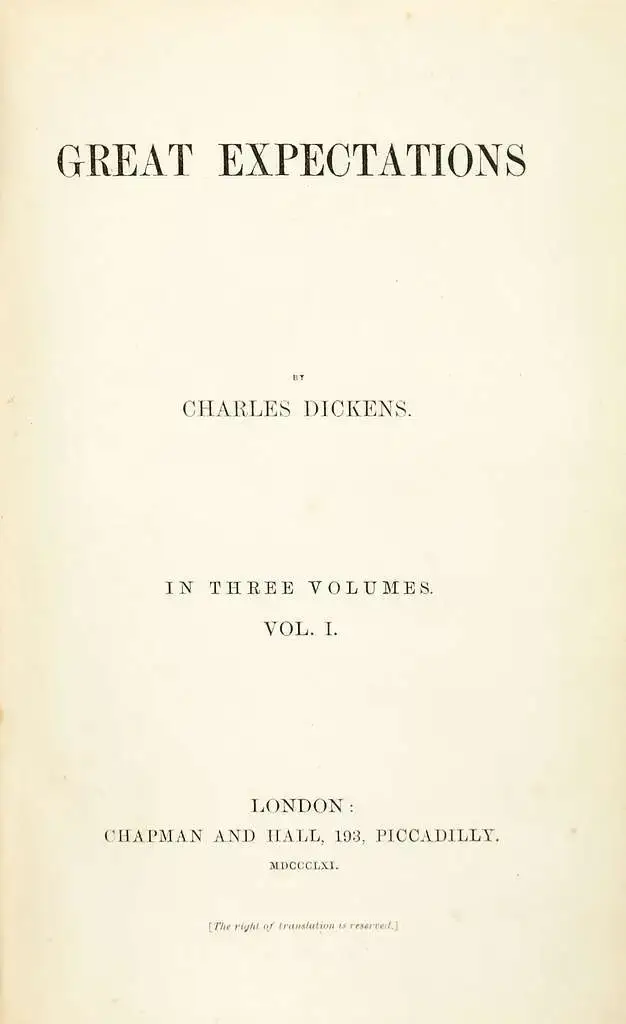
Great Expectations by Charles Dickens (1861)
Magwitch approaches Solitaire the way he approaches life: not by observing or adapting, but by leaving something changed behind.
In Great Expectations, Abel Magwitch is defined by survival. His life has been shaped by restriction—legal, social, and physical—and those conditions don't disappear when his circumstances improve. Even as Pip's benefactor, he remains a man used to operating within boundaries he cannot fully escape. And that pattern becomes visible in how he plays Solitaire.
". . . playing a complicated kind of patience with a ragged pack of cards of his own — a game that I never saw before or since, and in which he recorded his winnings by sticking his jack-knife into the table — when he was not engaged in either of these pursuits, he would ask me to read to him . . ."
The game itself is structured and contained, governed by fixed rules and limited outcomes. But in Magwitch's hands, it carries a different weight. The cards are worn, the movements repetitive, and his Solitaire scoring method is rough, physical, and permanent, marking the table with a knife. This physical gesture reveals something larger about how Magwitch responds to confinement. Even within a closed, rule-bound system, he feels compelled to act on it quietly, but not gently: to physically leave something altered behind.
Solitaire doesn't soften him or turn him inward. It exposes how he processes pressure. Faced with limits, he doesn't internalize or reflect—he externalizes. He works through the game physically, pushing toward resolution and leaving an imprint on the process itself. The structure of Solitaire mirrors the conditions he knows, but instead of retreating into it, he acts on it, changing something.
That same instinct appears elsewhere in the novel. From his first encounter on the marshes, where he turns desperation into command, to his long effort to reshape Pip's life from a distance, Magwitch consistently acts within constraint rather than withdrawing from it. Even when he cannot move freely, he finds a way to direct, influence, or alter what's in front of him.
Set against this is Pip, who is moving toward refinement and social performance. His world is shaped by appearances and interaction, where behavior is managed and meaning is often conveyed outward. The contrast highlights more than class. It reveals a difference in instinct. Where Pip learns to present himself, Magwitch continues to act on his environment.
Solitaire makes that difference visible. It shows that even in stillness, Magwitch remains active within the limits of the moment, turning a solitary, structured game into something that still leaves an imprint of who he is.
Magwitch responds to constraint by acting on it, leaving something changed behind. But not all characters respond to pressure this way. In some cases, the goal is not to alter the situation, but to keep it from breaking.
Solitaire As a Way to Manage Tension
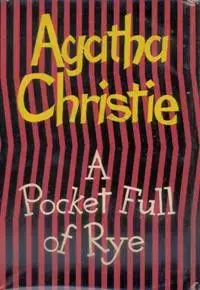
A Pocketful of Rye by Agatha Christie (1953)
Solitaire reveals how characters manage tension by holding everything in place.
In A Pocket Full of Rye, Solitaire appears in a moment that would typically demand a reaction. When news of Rex Fortescue's death reaches Mrs. Ramsbottom, she is found in her room playing Solitaire and doesn't stop. She does not respond with visible emotion. Instead, she continues laying out the cards, treating the event not as a disruption, but as something already accounted for.
"'I'm sorry to have to tell you. Miss Ramsbottom, that your brother-in-law, Mr Fortescue, was taken suddenly ill and died this morning.' Miss Ramsbottom continued with her patience without any sign of perturbation, merely remarking in a conversational way: 'Struck down at last in his arrogance and sinful pride. Well, it had to come.'"
The timing of the game matters. It isn't a way to pass idle time. It's a way to hold steady in the face of something that should unsettle her. The structure of Solitaire allows her to remain within a controlled system, where each move follows from the last and nothing spills beyond the boundaries of the table.
What this reveals is a different response to uncertainty. Mrs. Ramsbottom doesn't act on what she hears, and she doesn't internalize it in any visible way. She contains it. The game becomes a mechanism for maintaining order, even as something violent and unpredictable unfolds outside of it.
That same pattern appears throughout the novel. The murders themselves are structured around the "Sing a Song of Sixpence" rhyme, introducing a layer of imposed order onto acts that are anything but orderly. Within that environment, characters often respond by preserving routine rather than breaking from it. The tension isn't released; it's managed.
Solitaire reinforces that pattern. It doesn't interrupt the moment or expose hidden emotion. It holds everything in place, allowing the character to continue without outward disruption, even when the situation calls for one.
In these moments, Solitaire helps maintain order within uncertainty. But in some works, the relationship is reversed, The structure doesn't just manage uncertainty, it defines it.
Solitaire As a Way to Frame Fate
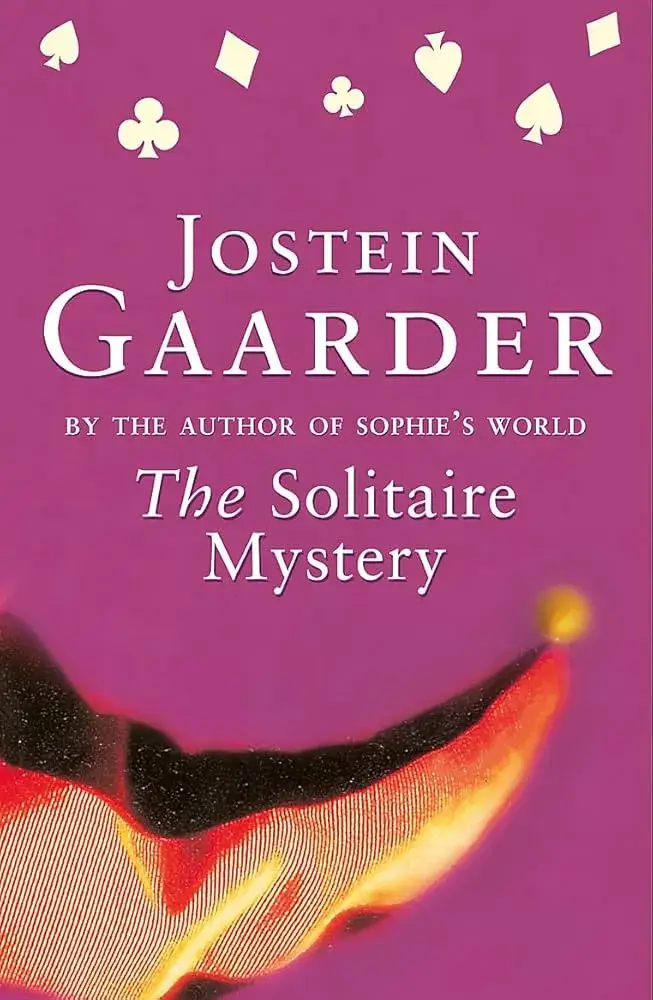
The Solitaire Mystery by Jostein Gaarder (translator, Sarah Jane Hails; 1990)
Solitaire shifts from something a character uses to something that defines the system through which reality is framed.
In The Solitaire Mystery, the role of Solitaire is less about the act of playing and more about the logic behind it. The story is built around a deck of cards, where each card carries meaning and position within a larger system. The structure is fixed. For example, 52 cards represent the weeks in a year, and 4 suits represent the seasons. But the Joker adds an element of chance and uncertainty. That combination mirrors the central question of the novel: whether life unfolds as a predetermined sequence or something shaped through individual choice.
The cards function as a framework. They map time, represent roles, and anchor the story within a contained system that reflects something larger. Characters are not simply making decisions within uncertainty. They are moving through a structure that may already define the limits of those decisions.
"A joker is a little fool who is different from everyone else. He's not a club, diamond, heart, or spade. He's not an eight or a nine, a king or a jack. He is an outsider. He is placed in the same pack as the other cards, but he doesn't belong there. Therefore, he can be removed without anybody missing him."
What this reveals is a different relationship to control than in the earlier examples. Pierre uses Solitaire to arrive at a decision. Magwitch acts on it. Mrs. Ramsbottom contains tension within it. Here, the system itself is the focus. The question is no longer how a character responds to uncertainty, but whether uncertainty is even real or simply part of a pattern that has already been set.
That idea runs throughout the novel. The story-within-a-story structure reinforces the sense that events are unfolding according to an underlying design, while the presence of the Joker introduces the possibility of disruption, something outside the system that can question or reshape it.
Solitaire, in this case, becomes allegorical. It doesn't reveal how a character thinks in a single moment. It reflects a broader way of understanding life itself—as something ordered, limited, and possibly predetermined, even as it appears to unfold through chance.
Solitaire Beyond Fiction
Solitaire begins as a way to structure time, but in fiction it becomes a way to reveal how that time is used and how characters think, decide, act, or hold steady when no one else is involved. The rules remain the same, but what happens within them changes, turning a simple sequence of moves into a clear view of how someone handles uncertainty.
That same experience still holds. Whether you play it on a table or online for free at Solitaire Bliss, the structure isn't changed, only the setting. Solitaire rules and chance both shape the game, but what you do within it is where meaning takes shape.