
12 Dominoes Strategies to Win the Game
To win a Dominoes game, you need a solid strategy to play your tiles effectively and stick your opponent with more pips than you. The goal of Dominoes is to be the first player to reach a predetermined amount of points (50, 100, or 150), and you score 1 point for every pip left in your opponent’s hand when you have fewer pips or play all your dominoes first. However, because the game requires that you just match numbers on each open end with tiles from your hand, it seems simple, but every tile changes what you and your opponent can do next.
A strong domino game strategy isn't just about finding a legal move. It's about keeping useful options in your hand, noticing what other players reveal, blocking the board, and shaping the open ends to set yourself up for future turns. Whether you call it Dominoes or playing bones, the same core skills appear again and again. And the 12 strategies below, ordered from beginner to more advanced, provide a practical foundation for anyone wondering how to play Dominoes like a pro.
1. Get Valuable Info from the Opening
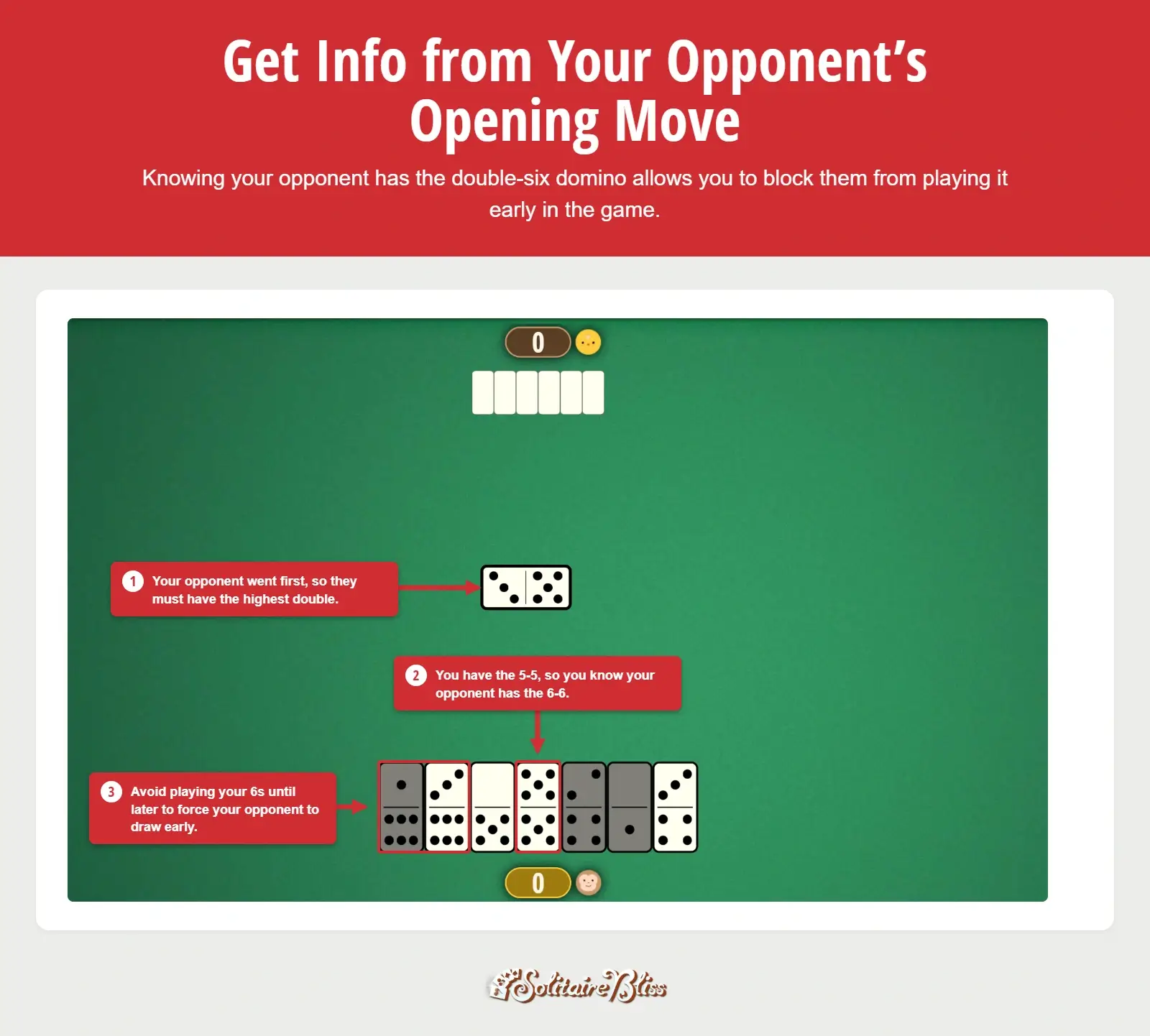
On Solitaire Bliss, the player with the highest double goes first, but just because they have the highest double doesn’t mean they have to play it. So if your opponent goes first and leads with a non-double tile, a quick glance at your hand may tell you something about theirs.
For example, if your opponent led with a 3-5, but you have the 5-5 tile in your hand, you know for sure they have the 6-6 tile because it’s the only higher double tile. Then you can avoid playing sixes as much as possible to keep that tile in their hand. Use any info you can get from that first tile to form a plan to block them from playing.
2. Count Your Pips to Plan Your Play
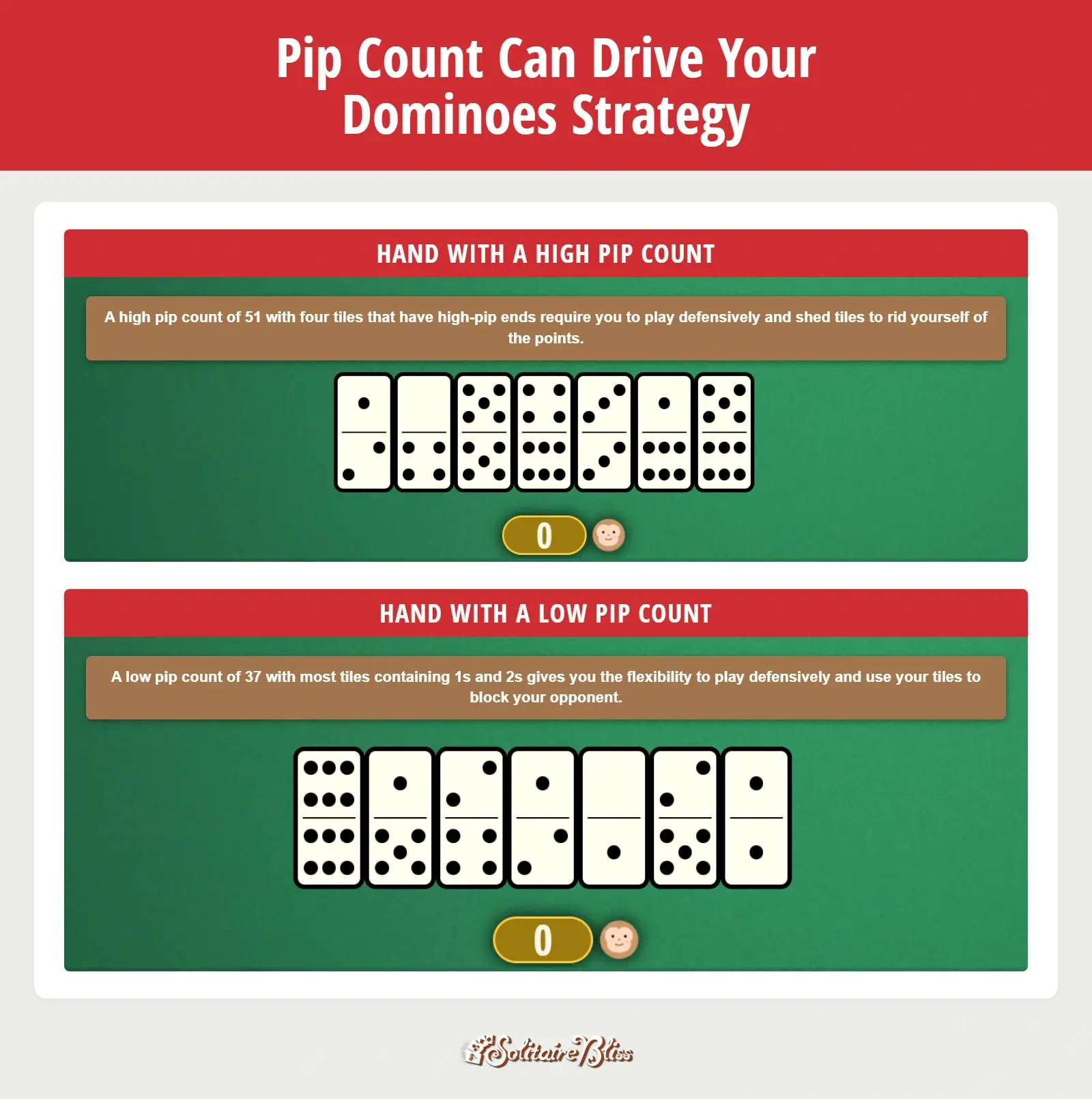
Finding your highest-pip tile and doing some quick math after the deal can help guide you into the right strategies. Because the full 28-tile set contains 168 pips, an average seven-tile hand is 42. If your pip count is above that, you're playing a shedding game, trying to rid yourself of high tile counts fast. But below that average, you can afford to block dominoes.
For example, if your hand includes 55 pips and high-pip tiles like 6-6 and 6-5, you want to get rid of those tiles and lower your pip count as quickly as possible to avoid ending the game with the highest number of pips. On the other hand, if you have a lower pip count and your tiles contain several zeroes, ones, and twos, you have a hand that can risk blocking your opponent. You can use your concentration of one of those lower numbers to control the ends and possibly block your opponent, causing them to have to draw dominoes to play.
3. Keep a Range of Numbers in Your Hand
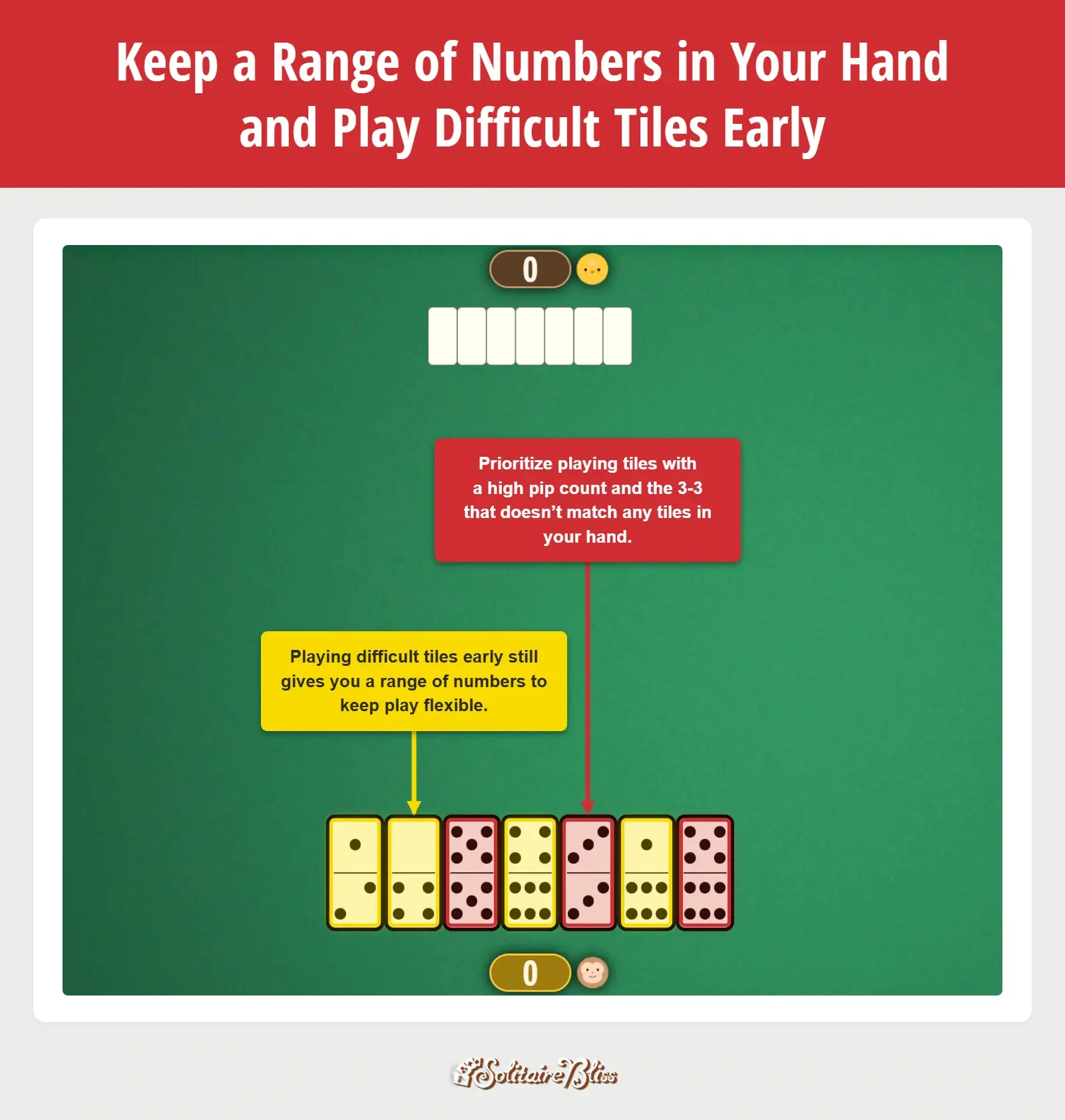
A flexible hand contains several different numbers and gives you more than one way to respond as the open ends change. For example, if the open ends are three and six, it’s safer to have playable tiles for both numbers than to hold several tiles that can only match the six. If your opponent closes the six, you can still play on the three instead of drawing or passing.
Flexibility matters even more when drawing is possible. If you can't match either end, you may have to take tiles from the boneyard, adding more pips to your hand and making it harder to finish. Keeping a varied hand reduces the likelihood that one change to the line will leave you without a move.
4. Play Difficult and High-Pip Tiles Early
High-pip tiles can become expensive liabilities if they remain in your hand when a round ends because you’re feeding points to your opponent. So look for safe chances to shed them while the board still offers several ways to play. This doesn't mean placing the highest tile automatically though. Instead, weigh its future usefulness against the risk of being stuck with it later.
You should also look for opportunities to play doubles early. Double tiles are less flexible than mixed tiles because both halves show the same number. If you hold the double six, for example, you need a six on the line to place it, and waiting too long may allow every available six to disappear.
5. Plan for More Than One Move Ahead
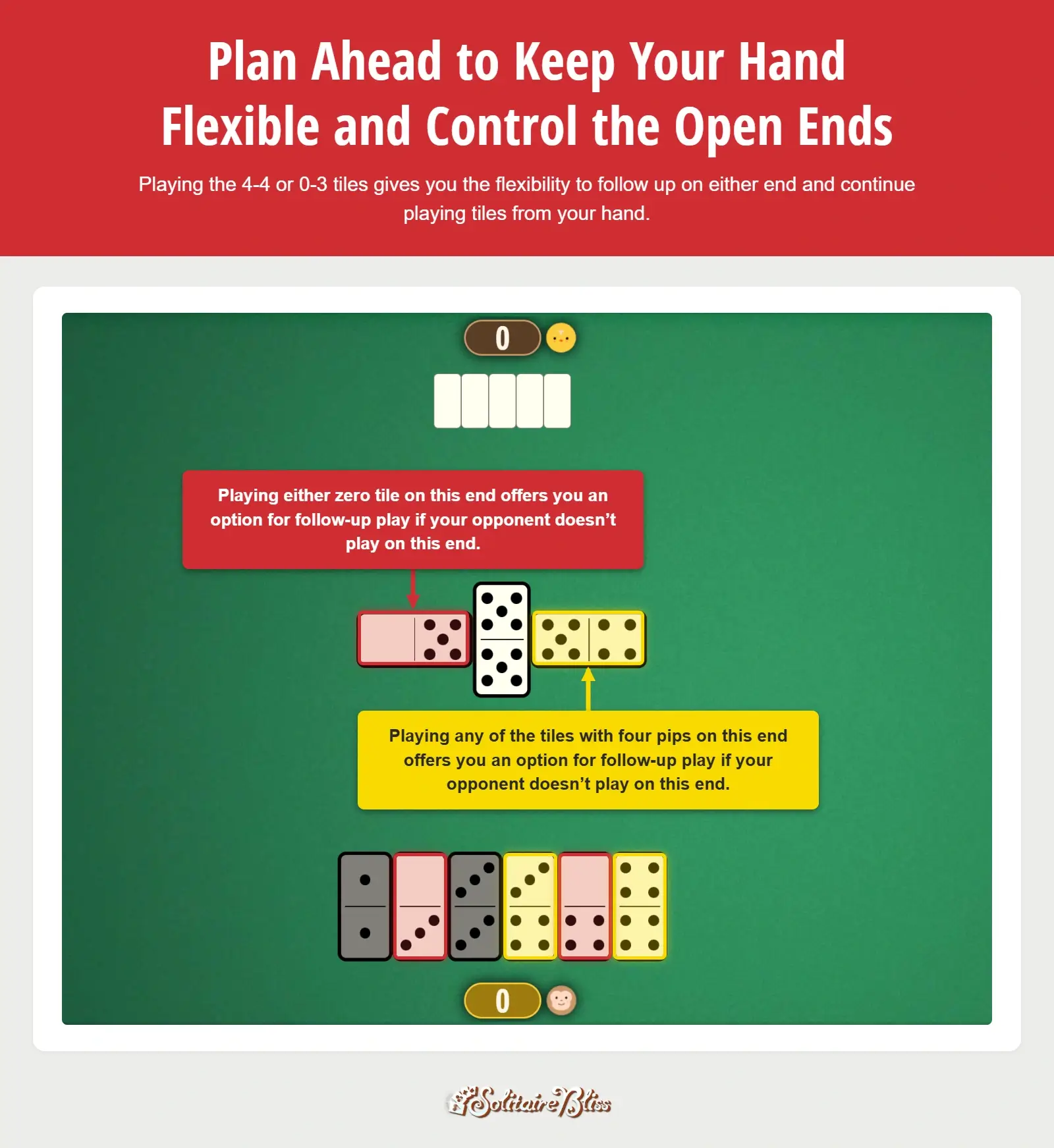
Before placing a tile, ask two questions: What number will I leave open, and what can I play if that number comes back to me? A move is stronger when it prepares another tile in your hand instead of merely solving the current turn. Over time, this habit turns a series of legal plays into a deliberate sequence.
For example, you can play either a 2-5 or a 2-6 on an open two. If you have several fives but no other sixes, leaving the five exposed gives you a better follow up. Of course, your opponent may change the line before your next turn, but planning around the most likely responses is still better than playing without a purpose.
6. Control the Open Ends
If you hold several tiles containing the same number, try to keep that number on one of the open ends. Doing so lets you use the strongest part of your hand while making it harder for an opponent who is weak in that number. This is called controlling the board. On Solitaire Bliss, there is no spinner because a double tile is placed sideways, which means there is always just two open ends during the game.
Control doesn't mean exposing your favorite number forever. If too many matching tiles have already been played, your supply may run out before your opponent's. Combine end control with tile tracking so you know when to maintain the number, when to switch it, and when to save a connecting tile for later.
7. Read Your Opponent and Go for the Block
Observation is one of the most useful dominoes skills because every play—and every failure to play—reveals information. When an opponent passes or draws, note the numbers showing at both ends. They likely couldn’t match either one at that moment. That means you can block play by continuing to play those numbers so your opponent is forced to draw.
Individual moves also reveal preferences. An opponent who repeatedly plays on fives may be trying to move away from fives to set themselves up for later plays, while someone who keeps reopening sixes may hold several of them. You can block their play by opening more fives or not playing sixes, respectively.
Don't treat one move as proof, however. Look for a pattern across multiple turns and compare it with the tiles already on the table. As your reads become more reliable, you can play defensively by blocking your opponent. You can avoid playing numbers they appear to want and play numbers they've struggled to match instead. So don’t wait to be certain of what numbers they don’t have. Just try to make better decisions with the clues available.
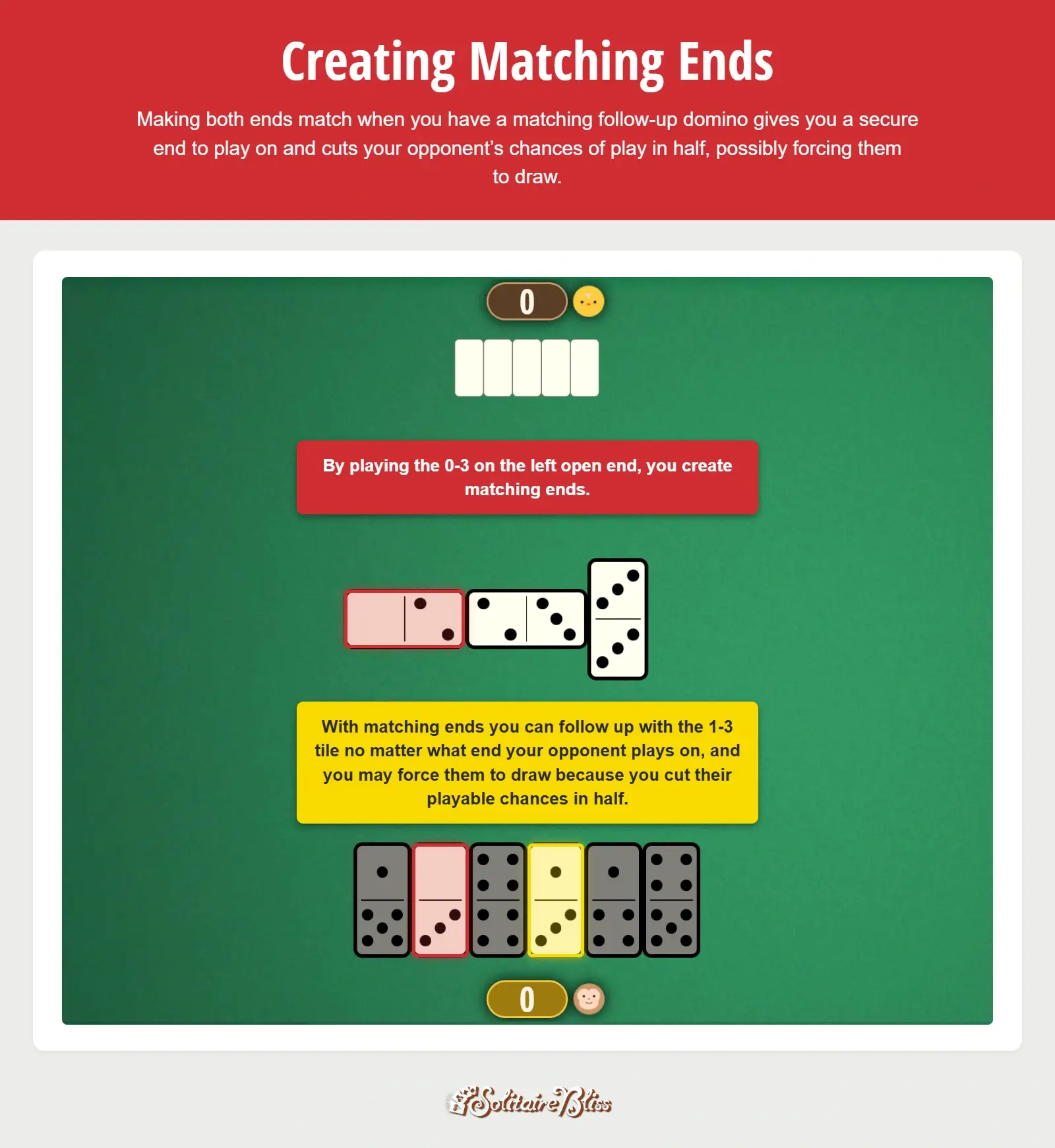
8. Create Matching Open Ends
When both open ends show the same number, your opponent has only one number to match instead of two. Cutting their choices in half can force a pass or draw, particularly when earlier play suggests they don't have that number.
Suppose the open ends are two and six, and your opponent plays on the six. If you can respond with a tile that leaves another two exposed, both ends will show two. Your opponent must now produce a tile containing a two, even if the rest of their hand could have matched several other numbers.
Don't create matching ends without checking your own tiles. If your opponent changes the line and you can't restore the number, the tactic may cost you control. But if you can pressure your opponent with this tactic, make sure you have another matching tile in reserve.
9. Track the Tiles
Tile tracking begins with a simple question: Which numbers have appeared most often? In a standard double-six set, each number appears on seven tiles. As more of those tiles are played, you can estimate whether the remaining copies are in your hand, your opponent's hand, or the boneyard. With a two-player game, these are only estimates, and if you’re playing in Block Mode with no drawing, this strategy won’t yield much. However, like many tracking strategies, you’re using this for clues, not absolute certainty.
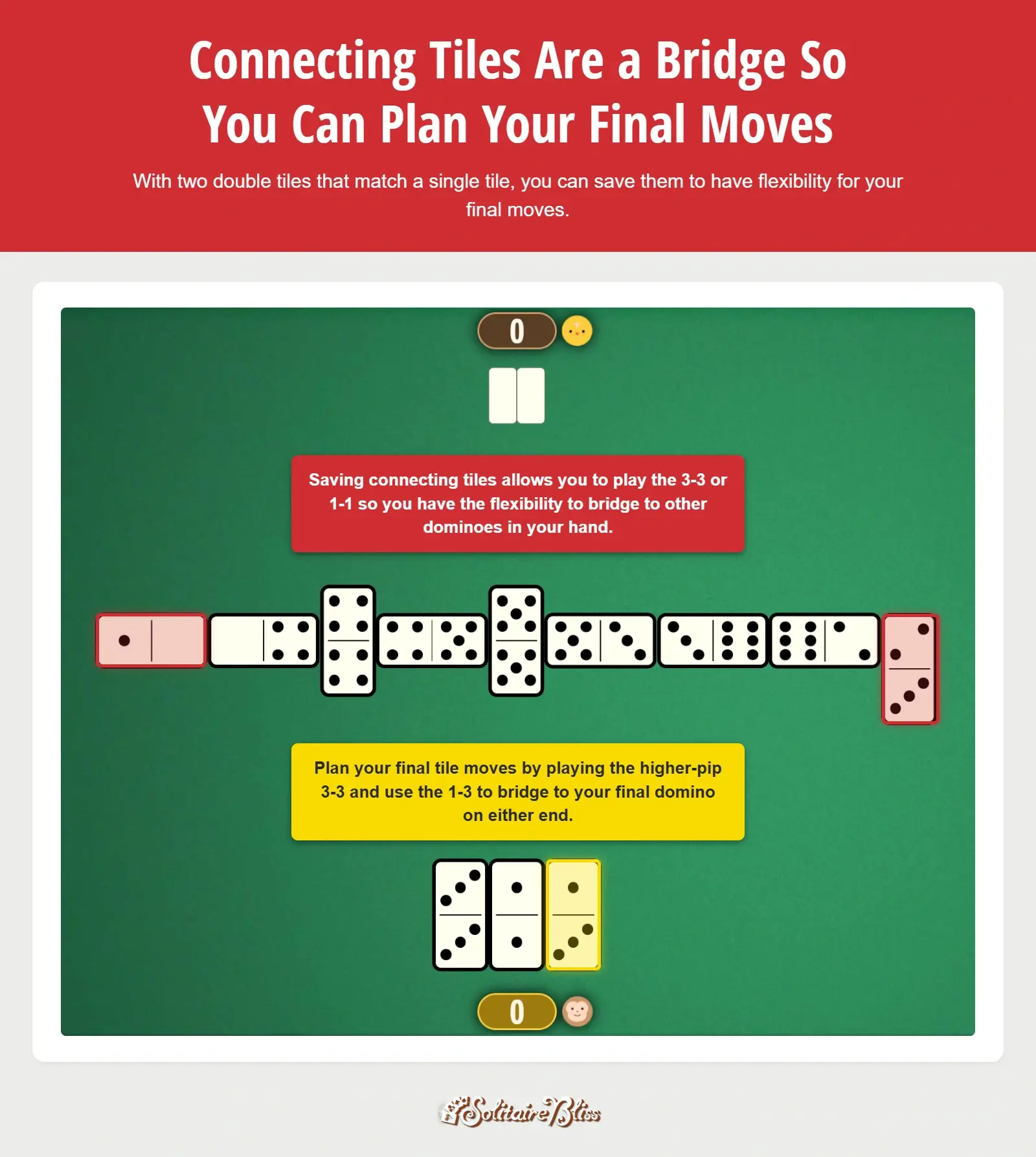
10. Save Connecting Tiles as Bridges
Some tiles are valuable because they connect the strongest groups in your hand. If you have several fours and several sixes, for example, a 4-6 tile lets you shift from one useful number to the other. Think of it as a bridge that keeps both groups available.
Avoid spending a strong connecting tile just because it's playable. A tile linking two numbers you control may be the only way to change direction later if an opponent closes one of them. Before placing it, check whether another tile can make the same move without sacrificing that flexibility.
Bridge tiles become especially important as your hand gets smaller. Saving the right connector can turn a group of awkward remaining tiles into a playable sequence, while using it too soon may leave two parts of your hand that no longer work together.
11. Plan Your Final Tiles in Reverse
As your hand gets smaller, identify the tile that's likely to be hardest to place and determine what it needs. Then work backward: Which tile can expose that number, and what must be open for you to play the setup tile? This creates a finishing sequence instead of leaving your last few moves to chance.
For example, if you want to finish with a 3-5 tile, one of your earlier tiles must leave a three or five open. If none can do that, the 3-5 isn't really your final tile yet, and you'll need to change the order before your options disappear.
Your opponent can always disrupt the sequence, so keep a backup route when possible. A flexible finish has two potential setup tiles or a bridge that can reconnect the hand after the open ends change. Even an imperfect plan is useful because it exposes problems while you still have time to solve them.
12. Adjust Your Strategy as the Round Develops
The best priority changes as the round moves forward. Early on, focus on flexibility, release high-pip or difficult tiles when it's safe, and watch what the other player reveals. You usually don't have enough information yet to make a precise read, so avoid committing your whole hand to a narrow plan.
In the middle of the round, put your observations to work. Track important numbers, preserve useful bridge tiles, and control the open ends your opponent appears least able to match. This is often the best time to build pressure because enough tiles have been played to reveal patterns, but you still have room to adjust.
Near the end, shift your attention to the exact tiles remaining in each hand. Plan your finishing sequence and count your pips so that you have a path to winning. An advanced domino strategy is the ability to recognize when your priorities need to change.
Dominate Using Dominoes Strategy on Solitaire Bliss
Strong dominoes play comes from connecting several small decisions. Keep a flexible hand, move awkward tiles before they trap you, plan your next turn, and watch what your opponent reveals. Then use tile tracking and end control to decide when to attack and when to protect your position.
Try practicing one or two ideas at a time until they become automatic. You can start by tracking passes, then add a count of one important number, and eventually plan complete endgame sequences. You can put these strategies to work by playing Dominoes free on Solitaire Bliss.
Back to the Homepage