
9 Essential Checkers Strategies to Control the Game
At first, playing Checkers looks simple, but one game against a skilled opponent quickly reveals you need a strategy to win this classic board game. Like chess, you can use strategic opening moves, proactive planning, and endgame maneuvers, all in an effort to gain an advantage and put your opponent on the defensive.
Whether you just want to avoid common mistakes or level up your current skills, these Checkers strategies can help you make smarter moves and gain an advantage throughout each stage of the game.
Quickstart Gameplay Rules
- Each player starts with 12 pieces (men) on the dark squares of the first three rows on their side of the 8×8 checker board.
- Move diagonally by moving one piece forward one space at a time and capture your opponent’s pieces by jumping over them to an open square.
- Captures are required, and multiple jumps may be possible in a single turn.
- If your piece reaches the far side of the board, it becomes a king and can move and capture in both directions.
- Win by capturing all of your opponent’s pieces or blocking them from making a legal move.
Checkers Strategies
In the game of Checkers, you want to give yourself as much advantage as possible, so you need more than just a single strategy tip to find a definite path to victory. It’s all about using the best tactic for the current board that minimizes your opponent’s ability to move while maximizing yours. So use these strategies to stay on the offensive and position yourself for a win.
1. Think Ahead
Although it may seem like a basic strategy, thinking ahead is essential to Checkers. Whether you’re forcing moves, looking for a path to crown a piece, or funneling your opponent to a trap, you have to think several moves ahead. You must consider all the possible moves your opponent can make in response to yours. Not only are you thinking ahead to play offensively, but you’re also thinking ahead defensively, making sure you don’t end up as a target for capture or caught up in a trap your opponent has set for you. So prioritize the move that gives you the best positioning.
2. Control the Center Early
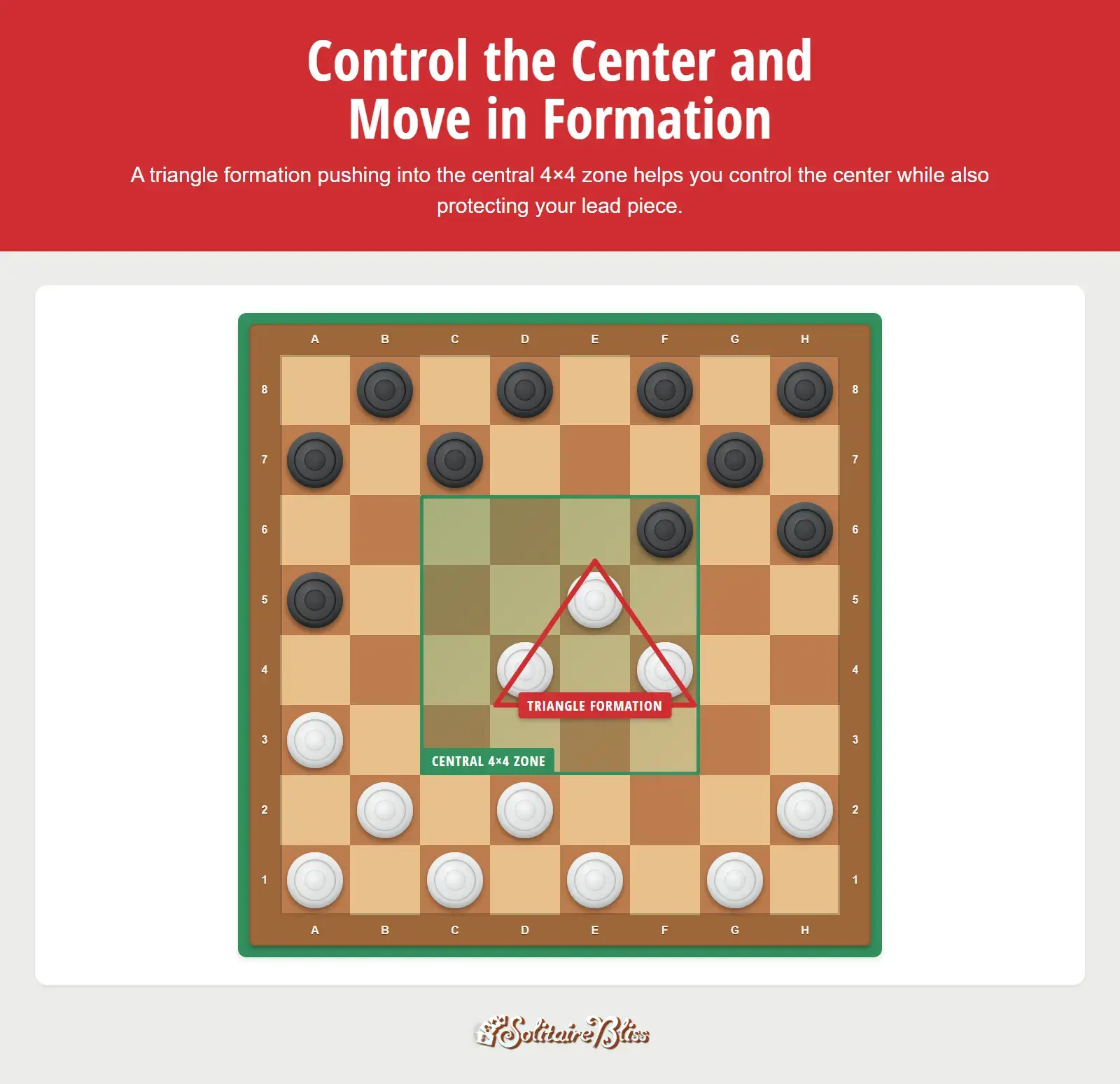
The 4x4 area in the center of the board is the most valuable section for gameplay. You can open your options for movement and limit your opponent’s when you control the center. To give yourself increased mobility for capturing men, move your pieces to the center early in the game, moving enough of them that you force your opponent to move around you.
This means your opponent must move to the edges of the board, where their options become limited and they are more readily forced into a capturing position. Early in the game, move your front-row men into the middle and back them up, if possible, to avoid captures. Although captures are inevitable in checkers, moving your pieces to the center gives you the best chance of gaining an early advantage.
3. Move Your Men in Formation
Formations means keeping groups of men together on the board in specific shapes, like a triangle or diamond. If you keep three pieces in a triangle shape, with the forward piece as the top point, you can move in a protected fashion across the board.
This shape protects the forward point from being captured and also forces your opponent to move around you, which offers you a better chance at pushing them to the edges and capturing them. The same idea applies to backing up your lead men. Back up your lead pieces when possible so that they can’t be captured as they travel across the board.
4. Force Moves and Create Traps
Forcing your opponent to make a specific move creates opportunities for you on the board. You must think ahead several moves and consider how to force them into a position that allows you to make a series of jumps or get one of your pieces to the king row (the row on the board farthest from you where kings are crowned; for your opponent, it’s the row closest to you) for promotion faster.
For example, sacrificing one of your pieces so that you force an opponent’s man to jump it from king row creates an opening for you to move in and be crowned. Another option is to position your pieces so that you steer your opponent to the side of the board where their mobility is so limited that the only safe moves they can make set you up for a jump or double jump or a way to block their escape.
5. Control the King Row
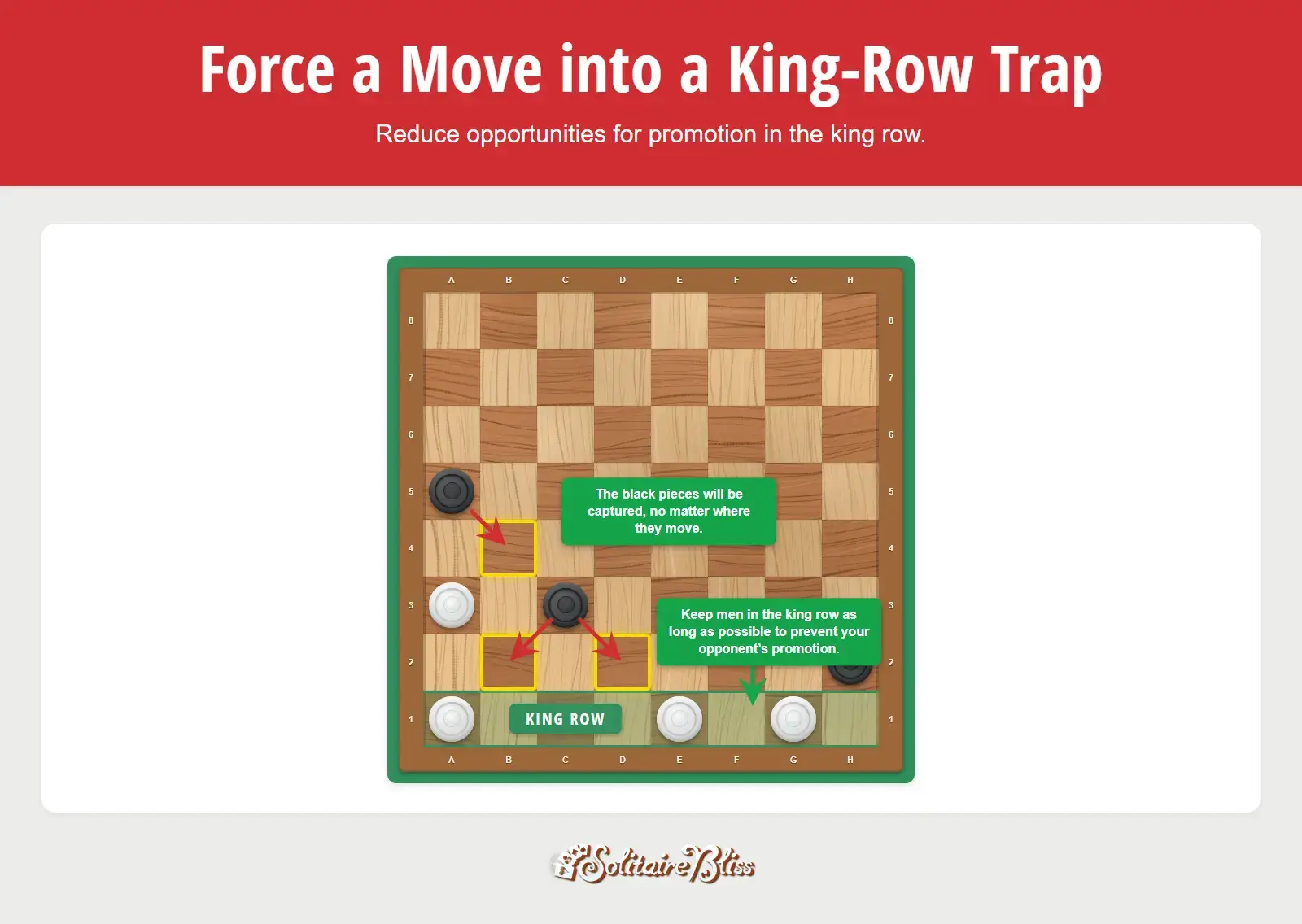
While most strategy is offensive for Checkers, this bit of defense is essential to the game. Your opponent can only crown a king by reaching your back row, the row closest to you, which is known as the king row. If your men occupy those dark squares, they block potential landing spots and make promotion more difficult. Keep pieces on your king row for as long as possible, especially in the early and middle game.
Eventually, you’ll need to move some of them, but do so carefully. By opening only one or two squares, you can influence the path your opponent must take toward promotion and steer them into vulnerable positions. This creates opportunities to set traps and capture their pieces before they reach the king row.
6. Weigh the Costs of Becoming King
Promoting your men to kings gives you a huge advantage compared to your opponent, but promotion isn’t always worth pursuing for every piece. It’s easy to fall into the trap of obsessing over getting every man crowned, but if you sacrifice three or more pieces just to get a single king, you’re wasting your men and not gaining the advantage you need.
Sacrificing a single man to create a clear path to the king row, however, can be worthwhile because you open a path to crowning more than one king and gaining a king may help you capture even more of your opponent’s pieces.
7. Create Favorable Trades
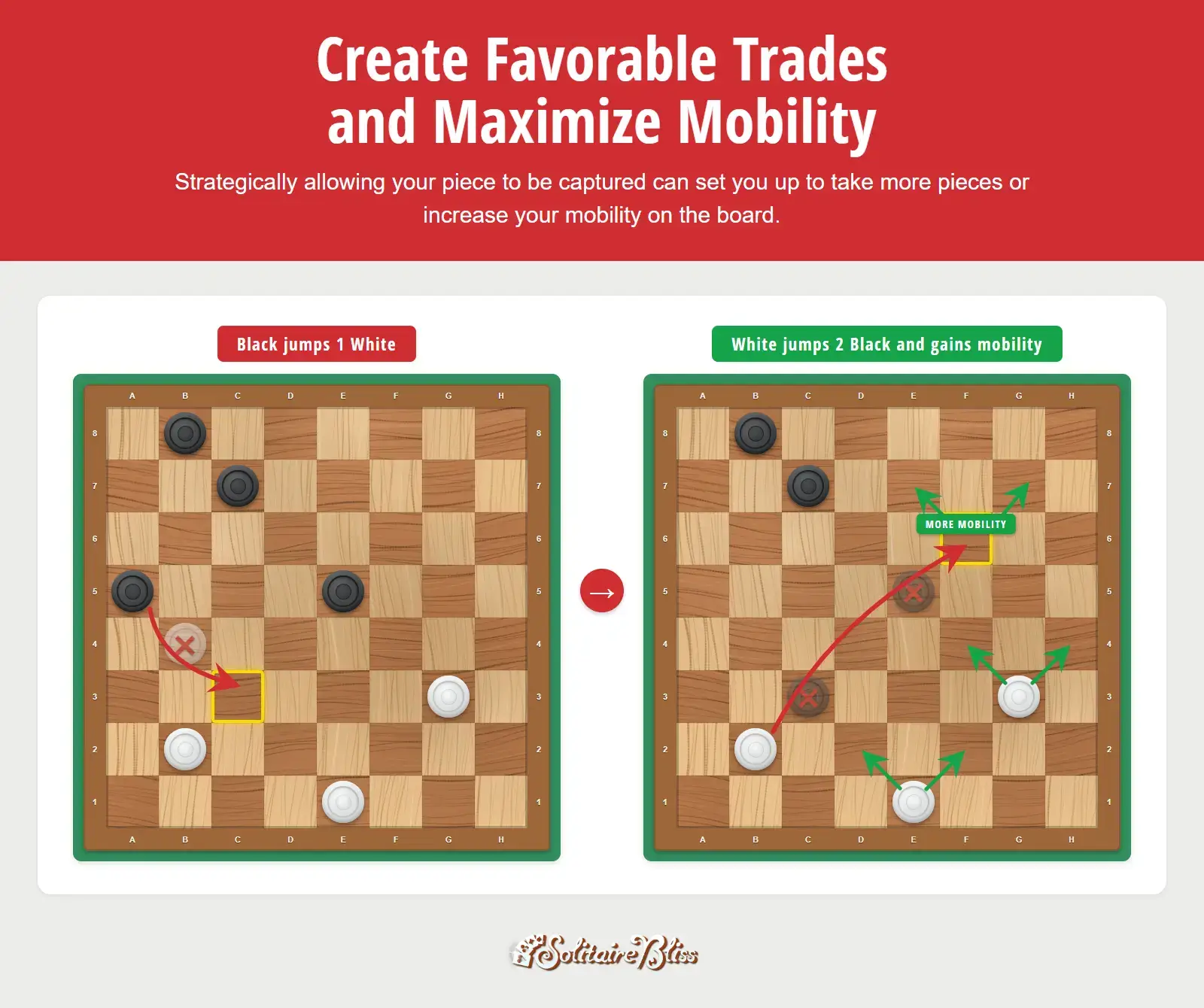
Often when you’re forcing moves or traveling across the board, you’ll see that your opponent may have an opportunity to jump you. If you can’t avoid it or you’re trying to force the jump, make sure you’re setting up an even trade. In other words, if your opponent will soon be able to capture you, be sure you’re able to capture their man or more than one of their men.
The capturing of pieces is part of the game, but you want an advantage or to at least stay even on the board. So sacrificing one of your pieces to capture one or more of your opponent’s men keeps the game moving and can give you an edge.
8. Prioritize Mobility
Throughout the game, focus on maintaining mobility. The more pieces you have that are blocked or clustered at the edges, the fewer options you have, and that means your advantage is diminished. Early in the game you’re thinning out each other’s men and creating space, but in mid-game and by endgame, the more mobility you have, the more opportunities you’ll have to create traps and escape those set by your opponent. So think beyond the advantage of simply capturing an opponent’s piece and instead think in terms of how that capture will impact your mobility on the board.
9. Change Your Thinking in the Endgame
As you move into the endgame, how you gain an advantage depends on how many men you have on the board. If you’re ahead, make even trades as that will keep you in the lead. But if you’re behind, keep trying to trap your opponent, force moves that give you captures, and get as many of your pieces promoted as possible. In the endgame, a single king can make the difference between winning and losing.
Practice Your Checkers Strategy on Solitaire Bliss
The best way to improve your strategy is to practice. As you play each game, focus on one strategy at a time and look for ways to gain an advantage. Because Checkers is won by staying on offense, look for every opportunity to push your opponent into a defensive position, create traps, and go for the win. And on Solitaire Bliss, you can play Checkers for free as often as you like and push your skills to the next level.
Back to the Homepage